
Associated Motorways, the sole agent for Suzuki-Maruti in Sri Lanka has placed orders for Zen cars from the Suzuki manufacturing plant in India following high demand. Despite the fact that prospects for car sales in Sri Lanka were not attractive as in other countries due to the country's economic condition, Maruti-Suzuki has found high demand for its latest Zen version.

Car market leader Maruti Suzuki India on Thursday said it will hike prices by up to Rs 32,500 across various models from February 1 to partially offset the rise in input costs. Due to rising input costs and operational expenses, the company plans to increase car prices, starting February 1, 2025, Maruti Suzuki India said in a regulatory filing.

Maruti Suzuki India on Monday said the production at its plant in Gurgaon has been impacted due to strike at Suzuki Powertrain India Ltd (SPIL), which supplies engines to MSI.

The slowdown in growth is an industry-wide trend and companies are adjusting production to bring down the inventory levels at plants as well as dealerships.
Car market leader Maruti Suzuki India's July sales remained almost flat at 58,543 units as against 57,909 units in the same month last year.

Former managing director of Maruti Suzuki India, Jagdish Khattar, passed away on Monday morning following a cardiac arrest, according to people close to him. Khattar (79), a former bureaucrat, was considered as one of the most high profile leaders of the Indian automotive industry, laying the foundation for Maruti's future growth after the government began its disinvestment in 2002 and gradually exited from its joint venture with Suzuki Motor Corporation (SMC). He had joined the then Maruti Udyog Ltd in July 1993 as director (marketing) and went on to become executive director (marketing) in the next six years.

The scheme, called 'Suhana Safar', targeted customers who aspire to own a car but were hesitant because of concerns around arranging the down payment or managing future EMI obligations.

The scrip jumped as investors tracked weakness in the Japanese yen which would boost margins of Suzuki's Indian subsidiary by reducing the costs of imports.
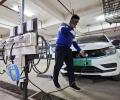
Electric vehicle (EV) sales in India are growing faster than the industry's ability to produce and deliver them, leading to supply shortages at dealerships during the peak festival season. This surge in demand is attributed to rising conventional fuel prices, making EVs a more attractive option for cost-conscious buyers.

Among the key concerns of the Street is market share losses in growth segments, led by higher competitive pressures.

"Export will not be better in this fiscal. It will remain more or less the same as last year or may be even worse. Situation in many global markets has not improved yet," Maruti Suzuki India (MSI) Chairman R C Bhargava said on the sidelines of Hero Mindmine Summit.
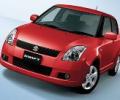
Maruti Suzuki is planning a medium term invement of Rs 6,000 crore (Rs 60 billion), part of which will be utilised to build five vehicle stock yards in the country within one to two years, a senior executive said.

With the government not continuing with lower excise duty beyond December 31, major car makers, including Maruti Suzuki, Hyundai, GM India and Honda have raised vehicle prices by up to Rs 127,000.

The 200-DMA is a closely watched indicator of a stock's long-term trend and can serve as an early warning of trouble.
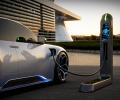
Electric passenger vehicle registrations in India surged by nearly 75 per cent year-on-year in October, significantly cushioning the 14.6 per cent contraction in the overall passenger vehicle market. This growth was particularly beneficial for manufacturers like Tata Motors and Mahindra, whose EV sales helped offset sharper declines in conventional internal combustion engine (ICE) vehicle registrations.

MSI is also looking to produce one million vehicles by the end of this fiscal.

Ahead of this year's Budget, leading car manufacturer Maruti Suzuki on Monday asked the government not to roll back the entire stimulus package at once as it may hamper economic growth.

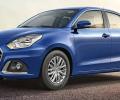
In 2025, the Maruti Suzuki Dzire has emerged as India's top-selling car, while sport utility vehicles continue to rule the broader passenger vehicle market, capturing almost 55 per cent of the segment.

Maruti Suzuki India and Hyundai reported single-digit sales growth in July with the sports utility segment continuing to drive overall demand in the market. Mahindra & Mahindra witnessed a 29 per cent increase in passenger vehicle dispatches while Tata Motors saw a marginal increase in the wholesales last month. Maruti Suzuki on Tuesday said its total domestic passenger vehicle sales stood at 152,126 units last month as compared to 142,850 units in the year-ago month, a growth of 6 per cent.
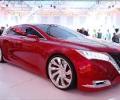
The country's largest carmaker, Maruti Suzuki, on Tuesday said it expects sales to grow around 10 per cent in 2010.

Its production declined for the third consecutive year in financial year 2020-21 (FY21) to an 11-year low, while sales volume contracted for the second year to the lowest since FY15. The company manufactured around 1.08 million vehicles last fiscal, a decline from 1.17 million the previous year, and a steeper fall from its all-time high tally of 1.62 million reported in FY18.

Maruti Suzuki Chairman R C Bhargava is pushing for increased government incentives for biogas-powered vehicles over hybrids, emphasising their net-zero carbon emissions and the valuable organic manure they produce, while also advocating for continued GST benefits for electric vehicles.
Maruti Suzuki India on Tuesday reported a 28 per cent rise in exports at 263,068 units in 2022, its highest ever overseas shipments. The company's previous highest exports was achieved in 2021 with 205,450 units. The highest exported models in 2022 were Dzire, Swift, S-Presso, Baleno and Brezza, the company said in a statement.

High price, combined with the decision to go only for diesel and position it as a crossover, resulted in its limited success

Foreign share holding limit in Maruti Suzuki India has reached trigger limit and any further investment by FIIs will be allowed only after RBI's approval.

The Road Transport Ministry has updated the Central Motor Vehicles Rules 1989 to allow flex-fuel vehicles capable of running on up to E100 (nearly pure ethanol). These amendments include E100 alongside E85 for emission certification and raise the vehicle weight limit for light petrol and diesel vehicles. This move supports India's strategy to reduce crude oil import dependence, with major automakers already developing flex-fuel models for the Indian market.

Maruti Suzuki India Ltd is not contemplating any price raise, despite a 20-30 per cent surge in raw material prices in recent months.

The edge that Maruti Suzuki enjoys over Hyundai and other rivals stem primarily from its gigantic scale, reports Ajay Modi.

As India's festive season approaches, passenger vehicle dealers are seeing a notable increase in inventories, yet discounts remain surprisingly moderate compared to previous years, signalling a tighter demand-supply balance in the automotive market.
Get Ahead reader Ronak Gandhi has been driving Maruti Suzuki Ritz ZXi -- the first car that he and his wife bought -- since October 2009. He has sent us this review in response to our reader invite.
The country's largest carmaker Maruti Suzuki India (MSI) on Thursday said it is planning to increase vehicle prices from January next year to offset the impact of the rise in input costs. The price increase would vary from model to model, the auto major said, without sharing the details.

More than 40 per cent of Cars24's sales are now linked to rural registration and transport office (RTO) locations, although procurement remains concentrated in urban markets.
The car will be priced up to Rs 805,000.

In a filing to the BSE, Maruti Suzuki India said HSBC Global Investments Fund Mauritius Ltd had sold 1,99,198 shares in the open market on June 29.

Maruti Suzuki India said it would be investing Rs 1,250 crore (Rs 12.50 billion) to double capacity at its K-series petrol engine unit in Gurgaon to 500,000 by 2012.

Maruti Suzuki on Thursday reported 6.54 per cent increase in sales at 1,18,949 units for February. The company had sold 1,11,645 units in the same month last year.

The January-March quarter (Q4) results for 2024-25 (FY25) from the country's largest passenger vehicle (PV) maker, Maruti Suzuki India (MSIL), were a mixed bag, with revenues broadly in line but operating profit missing Street expectations. Given cost pressures, margins at the operating level were the lowest in the past seven quarters.

At present, MSI has a staff strength of 7,500 employees. Enrollment in the next fiscal will be higher than the 800 people recruited this fiscal by the company.
India's largest car maker Maruti Suzuki on Saturday said its sales in October has dipped seven per cent at 64,490 units, against 69,415 units in the same month last year.
